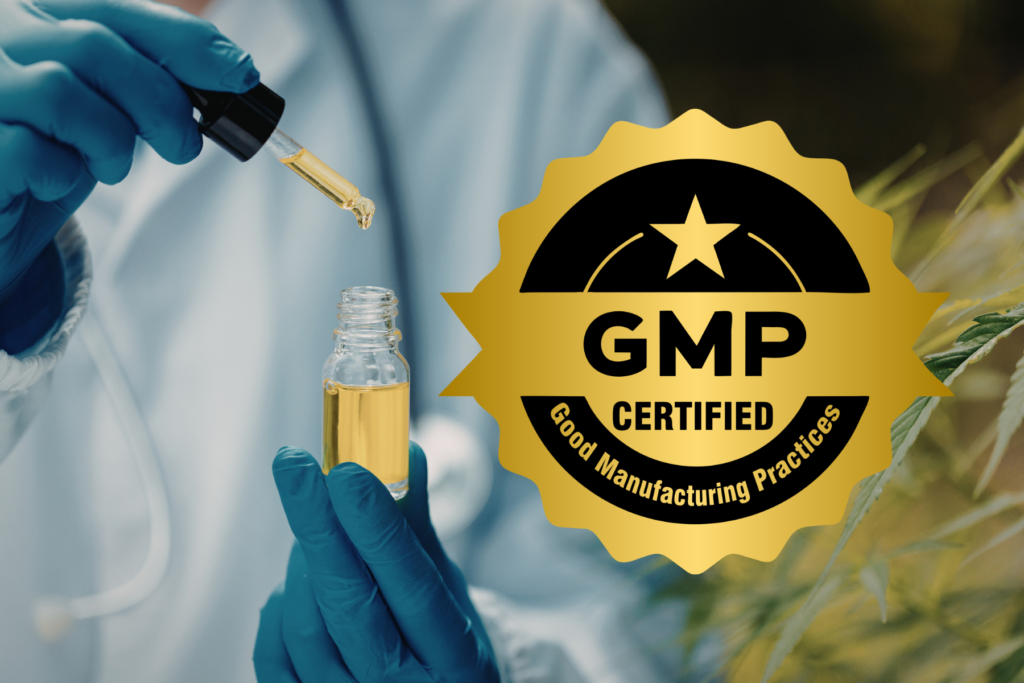
In the rapidly maturing cannabis industry, the bar for operational excellence is rising—and with it, consumer expectations and regulatory scrutiny. Among the most important benchmarks for any serious cannabis operator is compliance with Current Good Manufacturing Practices, or cGMP. But what does it really mean to be cGMP compliant? Beyond the regulatory checkbox, cGMP is a philosophy of quality, a framework for trust, and increasingly, a competitive differentiator in an industry where reputation, repeatability, and regulatory resilience are the keys to long-term success.
What Is cGMP (Current Good manufacturing Practices)
cGMP refers to a rigorous set of regulations enforced by the U.S. Food and Drug Administration (FDA) that establish the minimum requirements for the methods, facilities, controls, and documentation used in the manufacturing, processing, and packaging of drug products. These guidelines are designed to ensure that products are consistently produced and controlled according to quality standards that mitigate risks and protect public health. While cannabis remains federally illegal in the U.S., many forward-thinking state-licensed operators voluntarily adopt cGMP protocols—or are increasingly required to by state regulatory bodies—to demonstrate their unwavering commitment to safety, efficacy, and trust.
“cGMP compliance is not optional—it is the regulatory framework that defines how products must be consistently produced, controlled, and documented to meet strict standards for quality, safety, and traceability.” — Sarah Sanford, Director of Quality and Inventory Control for Planet 13 Florida.
At its core, cGMP is not merely a checklist but a culture. It ensures that products are manufactured in a tightly controlled, repeatable environment where errors are preemptively prevented—not merely corrected after the fact. Every detail is scrutinized and standardized, from the sourcing of raw materials to the maintenance of production equipment, the sanitation of surfaces, the qualifications of personnel, the documentation of every process, and the verification of final product quality.
Core Pillars of cGMP in Cannabis
Understanding what it means to be cGMP compliant is only the beginning. The real value lies in how these principles are operationalized across a cannabis business—from the cultivation floor to the packaging room and every department in between. At its core, cGMP (Current Good Manufacturing Practice) is not a checklist but a culture—one rooted in discipline, documentation, and continuous improvement.
To achieve and maintain cGMP certification, cannabis operators must build their processes around several core pillars. These foundational components establish the infrastructure for consistency, safety, traceability, and long-term scalability. Each one plays a vital role in ensuring that products are not only compliant but also meet the highest standards of quality and reliability. Let’s explore these pillars in greater detail.
-
- Quality Management System (QMS)
The Quality Management System is the central nervous system of cGMP compliance. A comprehensive QMS governs every operational process through documentation, change control, non-conformance tracking, root cause analysis, and both internal and external audits. It establishes a formalized system of corrective and preventative actions (CAPAs), creating a feedback loop that fosters continuous improvement. In a data-rich, high-risk environment like cannabis manufacturing, the QMS ensures that quality is not an act, but a habit.
-
- Facility and Equipment Controls
Facilities operating under cGMP must be designed to support sanitary production and prevent cross-contamination between materials and processes. This involves precision-engineered HVAC systems, airlocks, pressure differentials, and antimicrobial surfaces. Equipment must be qualified, calibrated, and maintained on a strict schedule. Every mechanical component must be functioning within validated parameters to prevent batch inconsistency or product failure.
-
- Personnel Training and Hygiene
In cGMP environments, people are both the greatest asset and the biggest potential liability. As such, comprehensive training programs are mandated—not just during onboarding, but at regular intervals thereafter. Employees must understand the rationale behind each SOP, adhere to strict hygiene protocols, and demonstrate competency through regular assessments. High staff turnover, common in cannabis, presents a unique challenge that makes documented training programs even more essential.
-
- Record Keeping and Traceability
In cGMP operations, if it isn’t documented, it didn’t happen. Every action, deviation, observation, and result must be recorded in real time, time-stamped, and linked to both the operator and the batch. This rigorous record keeping ensures that if a product needs to be recalled—or if an audit occurs—there is a fully traceable, reviewable history of every step in the product’s life cycle. This kind of end-to-end visibility is foundational to consumer safety and brand protection.
-
- Validation and Testing
Validation is the process of confirming that every piece of equipment, process, and method performs as intended—consistently and reproducibly. Analytical testing is integrated throughout the lifecycle, beginning with raw material acceptance and continuing through in-process and final product release. Testing verifies not just potency but also the absence of heavy metals, microbial contaminants, residual solvents, pesticides, and other impurities. Advanced labs now integrate automated systems and LIMS (Laboratory Information Management Systems) to ensure accuracy and compliance.
Why cGMP Matters More Than Ever
The cannabis industry is undergoing a dramatic evolution, moving from craft culture to scientific rigor. As legalization spreads and cannabis products become mainstream, consumer expectations are escalating. Today’s cannabis buyers—particularly medical patients—demand the same consistency and safety they expect from pharmaceuticals or nutraceuticals. cGMP provides the framework for meeting those expectations.
A 2023 report from the Association of Food and Drug Officials found that over 60% of U.S. state cannabis regulators anticipate implementing stricter manufacturing standards within the next two years, and many have begun referencing or directly adopting cGMP frameworks. This shift signals that the era of loosely regulated cannabis production is drawing to a close.
“When we launched our new line of infused gummies, we made the decision to implement full cGMP controls, even though they weren’t required by the state at the time,” says Natalie Diaz, Director of Manufacturing at a licensed producer in Florida. “It’s the foundation of our quality promise. Every product, every batch—we know exactly how it was made and why.”
For operators, the rewards of cGMP go far beyond compliance. cGMP unlocks greater efficiencies, lower defect rates, higher investor confidence, and the ability to enter new markets. It transforms chaotic, high-risk production lines into repeatable systems that scale with confidence and integrity.
How Planet 13 Approaches cGMP
At Planet 13, cGMP compliance isn’t just a goal—it’s an organizational philosophy woven into the company’s DNA. With an unwavering commitment to quality and consumer trust, Planet 13 has built its operational architecture around the principles of cGMP.
Planet 13’s facilities feature GMP-certified cleanrooms, advanced environmental control systems, HEPA filtration, and humidity-controlled processing rooms. Employees undergo regular, documented training and are certified in key production protocols. The company also integrates digital systems for batch tracking, deviation reporting, equipment calibration, and automated alerts for preventive maintenance.
Planet 13’s vertically integrated model—spanning cultivation, production, and retail—creates a seamless quality assurance pipeline. Each plant is barcoded and tracked through its lifecycle. Every finished good undergoes internal quality testing and third-party verification. This end-to-end rigor not only protects consumers but also enables the company to expand its footprint without sacrificing quality.
The benefits of cGMP at Planet 13 are already tangible: significantly reduced product recalls, higher customer retention, streamlined onboarding of new staff, and faster time to market for new SKUs. In an industry defined by rapid change and increasing complexity, cGMP is the infrastructure that allows Planet 13 to grow without growing pains.
How to Implement cGMP in a Cannabis Company
Achieving cGMP compliance in a cannabis company is a transformative process that requires commitment, investment, and organizational alignment. It is not simply a one-time certification, but an ongoing system of practices and values that must be embedded into every level of the organization. For cannabis operators seeking to build enduring brands in a crowded marketplace, cGMP is the clearest path to operational maturity and long-term success.
Here’s how operators can begin the journey:
-
- Conduct a Gap Analysis Start by comparing your current operations to cGMP requirements. A comprehensive gap analysis identifies where you fall short in facility design, documentation, training, equipment validation, and quality controls. This becomes the blueprint for your compliance roadmap.
- Establish a Quality Team Designate a Quality Assurance (QA) lead or department responsible for implementing and managing your Quality Management System (QMS). This team should have authority to enforce SOPs, manage audits, review documentation, and approve process changes.
- Design Facilities for Compliance Invest in physical upgrades that align with sanitary and contamination control standards. This may include installing cleanroom environments, HEPA filtration systems, separate HVAC zones, washable surfaces, and handwashing stations. The facility layout should promote logical product flow, from raw material intake to finished goods.
- Develop and Validate SOPs Create detailed Standard Operating Procedures for every process, from equipment cleaning and sanitation to packaging and label application. Each SOP must be reviewed, approved, and periodically reassessed for effectiveness. Validate key processes through rigorous testing to confirm they perform consistently and as intended.
- Train Staff Consistently Every employee must be trained not only on their job tasks but also on broader GMP principles like hygiene, documentation, and contamination prevention. Maintain training logs and require recertification at regular intervals.
- Implement Documentation and Batch Records All activities must be documented in real time. Create batch production records (BPRs), maintenance logs, cleaning schedules, calibration records, and deviation reports. These documents create the traceability required for compliance and internal accountability.
- Engage Third-Party Experts Consider hiring cGMP consultants, quality auditors, and validation specialists to help guide the process. These experts can accelerate compliance by identifying blind spots, conducting mock inspections, and validating systems.
- Build a Culture of Quality Perhaps the most critical step is cultivating a mindset of continuous improvement. Empower employees at all levels to take ownership of quality. Use internal audits, performance metrics, and customer feedback to identify opportunities for refinement.
cGMP and the Future of Cannabis
As cannabis inches toward federal legalization, cGMP will become the litmus test for who’s ready to compete on a national stage. Operators who treat cGMP as an optional upgrade will find themselves shut out of key distribution channels and high-value partnerships. Those who embrace it will be positioned as leaders in a field that increasingly rewards professionalism over novelty.
cGMP compliance will also enable the kind of brand consistency that national and global consumers expect. Whether someone buys a vape cartridge in Las Vegas or a tincture in Tampa, they will want to trust that the product was made with the same care, under the same conditions, and with the same ingredients. That level of confidence is only possible when cGMP is the norm, not the exception.
But most importantly, cGMP represents a shift in mindset. It’s a move from reactive problem-solving to proactive excellence. It signals that a company understands its responsibility—not just to regulators, but to the patients and consumers who depend on them.
“GMP isn’t just about meeting compliance standards—it’s a mindset. It reflects a commitment to doing things the right way, and in cannabis, that level of care and intention truly matters to consumers.”
— Sarah Sanford, Director of Quality and Inventory Control for Planet 13 Florida.
In the years ahead, cGMP won’t just define the most compliant cannabis operations. It will define the most respected, most reliable, and most ready to lead.
DISCLAIMER
This content is for educational purposes only and does not constitute medical advice. Planet 13 Florida is a licensed Medicinal Marijuana Treatment Company. Medical cannabis in Florida requires a valid physician recommendation and OMMU registration. No cannabinoid compound discussed herein is FDA-approved for the treatment, cure, or prevention of any disease or condition, except where explicitly stated (e.g., Epidiolex for epilepsy). Research cited represents the current state of scientific inquiry and should not be interpreted as established clinical guidance. Consult your physician before making any changes to your wellness plan.
Planet 13 Florida operates 33 dispensary locations across the state of Florida as a licensed Medical Marijuana Treatment Center (MMTC). Florida law requires a physician recommendation to purchase medical cannabis products.
© Planet 13 Florida | Patient Education Series