 In the cannabis industry, where every gram counts and margins are tightening, efficiency is more than a goal—it’s a necessity. Borrowed from the world of industrial manufacturing, lean principles offer cannabis cultivators a powerful framework for eliminating waste, maximizing value, and streamlining operations without sacrificing quality. At Planet 13, lean thinking isn’t just a concept; it’s embedded in every decision, process, and person.
What Is Lean Manufacturing?
Lean manufacturing is a system of production optimization that originated in the automotive industry, most notably through Toyota’s revolutionary Production System. At its heart, lean manufacturing is not simply about doing more with less—it’s about building a culture of continuous improvement that focuses relentlessly on delivering value to the customer while systematically eliminating anything that does not contribute to that goal. Its core philosophy is elegantly simple yet operationally transformative: eliminate waste (“muda”) in all forms to enhance process efficiency, improve product quality, and elevate overall organizational performance.
Lean thinking is grounded in the idea that every process, every movement, and every decision should directly contribute to a value-creating outcome. In practical terms, this means redesigning workflows to maximize efficiency, improving cross-department collaboration, minimizing production delays, and constantly evaluating whether each activity adds meaningful value to the final product. It encourages proactive problem-solving and structured feedback loops so that incremental improvements are continuously pursued and sustained.
There are seven commonly recognized types of waste in lean, each of which can significantly hinder efficiency and productivity if left unchecked. Each of these waste categories has a direct analog in cannabis cultivation and post-harvest processing, from misaligned harvesting schedules to inefficient inventory management or quality inconsistencies. By systematically addressing these forms of waste, cannabis operators can unlock higher margins, reduce operational risk, and deliver a more consistent, high-quality product to their customers.
7 Waste Types
-
- Overproduction: Creating more product than is currently needed, which can tie up resources, space, and cash flow.
- Inventory: Excess materials or products not being processed, leading to potential spoilage, clutter, or inefficiency.
- Waiting: Idle time when processes, people, or machines are stalled due to delays, miscommunication, or dependency gaps.
- Motion: Unnecessary movements by people or machines that don’t add value, such as excessive walking, reaching, or searching.
- Transportation: Unneeded movement of products, materials, or information between areas, which often increases handling risk and time.
- Overprocessing: Adding more work, components, or complexity to a process than what is necessary to meet customer expectations.
- Defects: Errors or flaws in the product that require rework, delay delivery, or result in wasted materials and labor.
Lean in the Grow: Cultivation Applications
At the heart of every successful cultivation facility lies the operational backbone that supports consistency, quality, and agility. In a lean-driven cannabis grow, these elements are not left to chance—they are the product of intentional design and continuous improvement. Planet 13 applies lean thinking to the cultivation floor in a way that’s deeply embedded into the daily rhythms of the team, from the first clone to the final cure.
One of the first areas where lean principles take hold is in workflow design. The layout of a grow facility has a significant impact on how efficiently staff can move, how safely materials are handled, and how easily information flows. At Planet 13, pathways are mapped and optimized so that the movement of plants, people, and equipment is as frictionless as possible. This reduces unnecessary motion, limits cross-contamination risks, and ensures every step is purposeful.
Supporting that streamlined flow is a robust system of Standard Operating Procedures (SOPs). These documented processes serve as the playbook for how cultivation tasks are executed—from nutrient mixing to pruning and canopy management. SOPs reduce variability across shifts and staff, ensuring that every plant receives the same care and attention, every time. At Planet 13, SOPs are living documents—regularly updated based on lessons learned and performance data, allowing the operation to evolve intelligently over time.
To make these systems intuitive and scalable, the team relies heavily on visual management tools. Grow rooms are outfitted with color-coded bins, signage, floor markers, and labeled equipment, creating an environment where every team member, regardless of tenure, can quickly understand their tasks and navigate their workspace with confidence. This visual language enhances accountability, improves training speed, and keeps the grow in sync across multiple shifts.
Inventory management is another area where lean shines. Instead of overstocking and tying up valuable capital and space, Planet 13 employs a just-in-time inventory system. Nutrients, growth media, and consumables are ordered and delivered based on real-time usage data. This strategy not only reduces waste and clutter but also protects against expiration and over-ordering while ensuring nothing critical runs out unexpectedly.
Perhaps most importantly, Planet 13 cultivates a culture of continuous improvement—known in lean methodology as Kaizen. Team members are empowered to identify pain points and propose solutions, whether that means suggesting a new layout for the clone room or refining the way environmental data is logged. These contributions are taken seriously and often implemented, creating a sense of ownership and pride among staff that drives performance.
Post-Harvest Efficiency
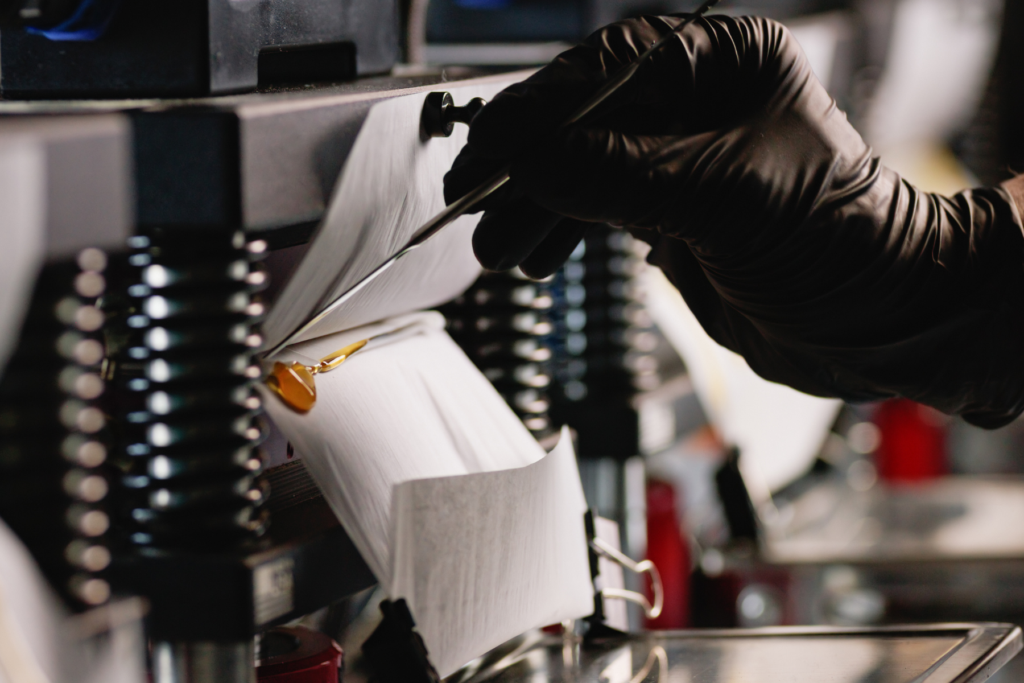
Post-harvest operations, including trimming, drying, curing, and packaging, are often where operational inefficiencies quietly take hold. These stages are critical not just for preserving product integrity but also for ensuring consistency, safety, and profitability. Lean manufacturing brings clarity and discipline to these areas, turning them from bottlenecks into competitive advantages.
Take trimming, for instance. It’s one of the most labor-intensive stages of cannabis processing, and even slight variations in technique can result in significant product loss. At Planet 13, trimmers undergo continuous training to hone their technique, and equipment is routinely calibrated to ensure blades are sharp, accurate, and optimized for minimal waste. These practices help reduce trim loss, preserve valuable cannabinoids and terpenes, and improve the overall appearance of the product.
Another vital area of improvement is batch tracking and loss analysis. By implementing precise tracking systems, Planet 13 can identify exactly where weight is lost during post-harvest, whether due to evaporation, handling errors, or processing inefficiencies. These insights inform both equipment upgrades and process tweaks, reducing loss over time and improving yield predictability.
Ergonomics also play a major role in lean post-harvest practices. Tasks like trimming and packaging require sustained focus and repetitive motion, which can lead to worker fatigue and injury. Planet 13 invests in ergonomic workstation design—adjustable tables, padded flooring, and strategically placed tools—so staff can maintain productivity while minimizing physical strain. This not only boosts throughput but also improves morale and reduces turnover.
Production pacing is another often overlooked area where lean principles can make a difference. By using takt time—an approach that sets the ideal rhythm for production based on customer demand—Planet 13 ensures that each team member’s output is aligned with operational goals. This reduces overproduction, prevents employee burnout, and maintains a steady flow through every stage of post-harvest.
Together, these lean applications create a finely tuned post-harvest environment where quality and efficiency go hand in hand. Waste is no longer a hidden cost—it’s a visible target for ongoing improvement.
How to Use Lean Principles in Your Cannabis Operation
For cannabis operators looking to adopt lean manufacturing, the journey begins with a shift in mindset and a commitment to ongoing improvement. Lean is not a plug-and-play toolkit—it’s a disciplined approach that grows in value over time. Here’s how to begin applying lean thinking in a cannabis cultivation or processing facility:
1. Start with a Waste Audit: Identify the seven types of waste in your current operation. Are there delays in harvest due to equipment downtime? Do staff members spend time walking between departments? Are packaging materials being overstocked? Document these inefficiencies and prioritize which areas need immediate attention.
2. Map Your Workflows: Use process mapping tools like value stream mapping to chart the movement of materials, products, and people. This visual representation helps spot bottlenecks and areas of redundancy. For example, if trimming is constantly delayed because product isn’t reaching the station on time, that’s a process disconnect that needs addressing.
3. Implement Visual Management: Once you’ve mapped the workflows, introduce color-coded labels, signage, and floor markings to organize tools, materials, and spaces. Visual cues reduce confusion, support faster onboarding, and help standardize operations, especially when multiple teams share space or rotate shifts.
4. Develop and Refine SOPs: Standard Operating Procedures ensure consistency across cycles and shifts. These should be detailed, easily accessible, and regularly reviewed. Empower your team to flag inefficiencies in SOPs and suggest updates—this supports both accuracy and staff engagement.
5. Use Metrics to Drive Improvement: Lean relies on data. Track key performance indicators (KPIs) such as yield per square foot, harvest cycle time, trim loss percentage, and inventory turnover. Analyze trends, set benchmarks, and create feedback loops so staff can see the results of their efforts.
6. Empower Your Team with Kaizen: Build a culture where every team member—from cultivation to compliance—feels responsible for process excellence. Hold regular improvement meetings, incentivize actionable suggestions, and celebrate small wins. Even minor changes, like adjusting lighting schedules or repositioning storage bins, can create meaningful efficiency gains over time.
7. Think Long-Term: Lean transformation doesn’t happen overnight. It’s a journey of continuous learning and incremental refinement. Start small, scale what works, and remain adaptable to change as your business grows.
By embedding these lean strategies into daily operations, cannabis businesses can enhance their agility, reduce costs, and improve product quality—turning operational discipline into a competitive advantage.
Conclusion
Lean manufacturing is not about cutting corners—it’s about cutting waste, eliminating inefficiencies, and empowering teams to work smarter at every level. For cannabis operators looking to remain competitive in an industry where margins can shrink overnight and regulations continually evolve, adopting lean principles offers a proven, repeatable framework for driving sustainable success. It provides tools to do more with less, mitigate risks before they materialize, and align day-to-day activity with long-term strategic goals.
More importantly, lean isn’t just a method for improving internal processes; it has a direct and measurable impact on the consumer experience. The result is fresher product, consistent potency, transparent quality standards, and faster delivery to market. It’s how cultivators build trust, establish reliability, and set themselves apart in an increasingly crowded space.
At Planet 13, lean is more than an efficiency strategy—it’s a culture of operational excellence that puts quality, customer experience, and continuous improvement at the center of everything we do. It empowers our people, refines our processes, and keeps our product at the pinnacle of consistency and quality. In the cannabis sector of tomorrow, it won’t be enough to grow great flower—you’ll need to grow smart. Lean makes that possible.
DISCLAIMER
This content is for educational purposes only and does not constitute medical advice. Planet 13 Florida is a licensed Medicinal Marijuana Treatment Company. Medical cannabis in Florida requires a valid physician recommendation and OMMU registration. No cannabinoid compound discussed herein is FDA-approved for the treatment, cure, or prevention of any disease or condition, except where explicitly stated (e.g., Epidiolex for epilepsy). Research cited represents the current state of scientific inquiry and should not be interpreted as established clinical guidance. Consult your physician before making any changes to your wellness plan.
Planet 13 Florida operates 33 dispensary locations across the state of Florida as a licensed Medical Marijuana Treatment Center (MMTC). Florida law requires a physician recommendation to purchase medical cannabis products.
© Planet 13 Florida | Patient Education Series